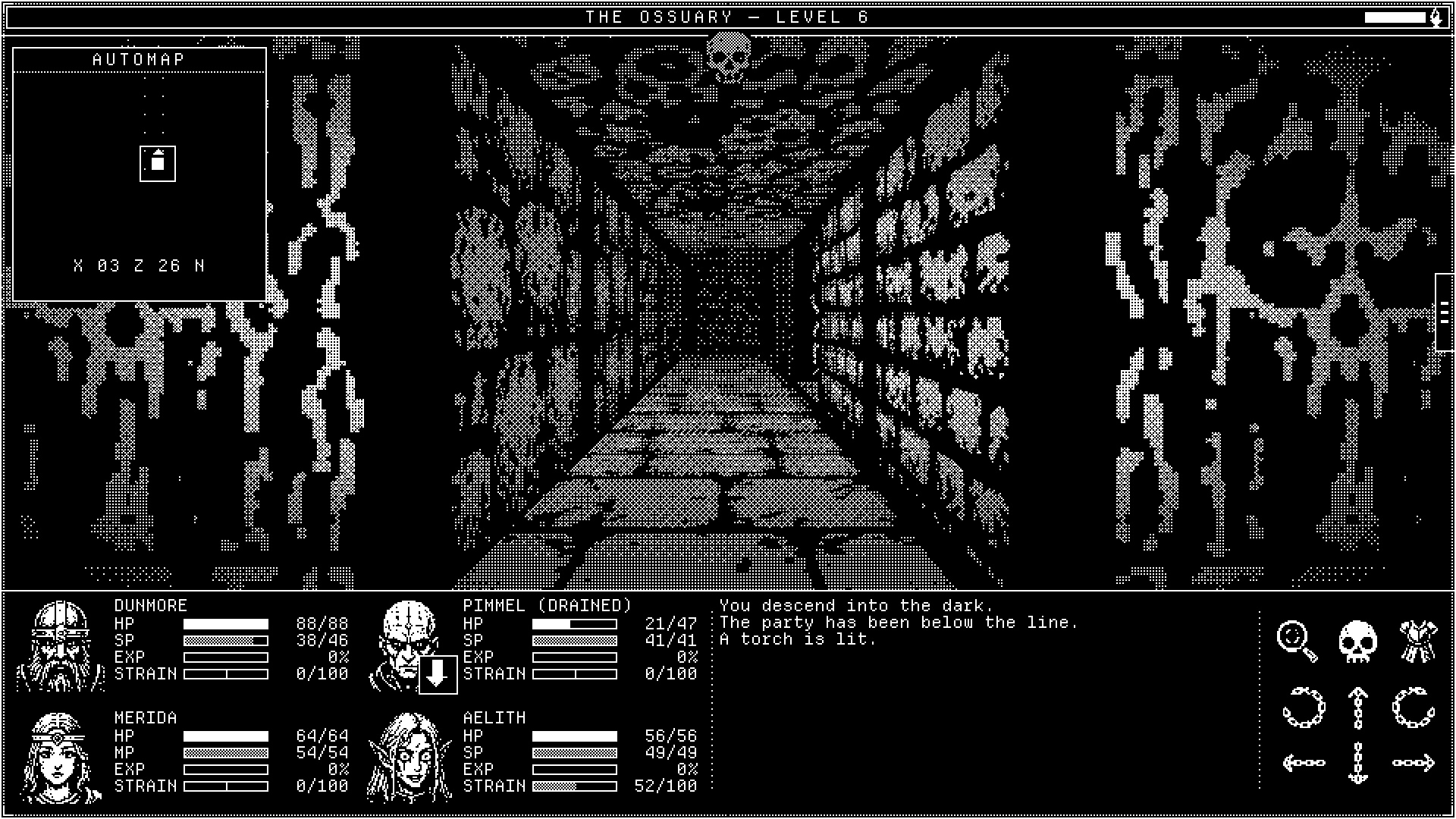
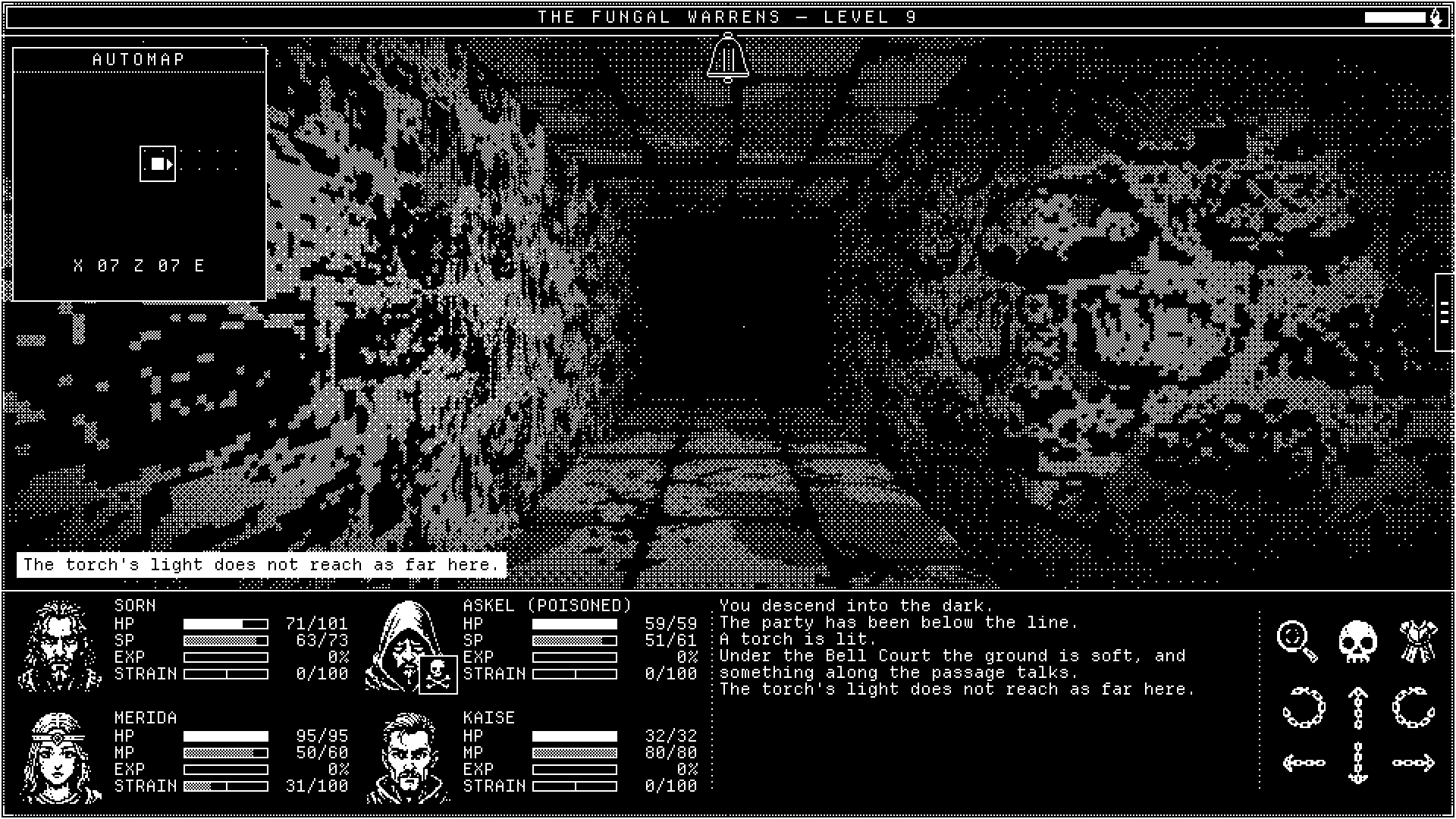
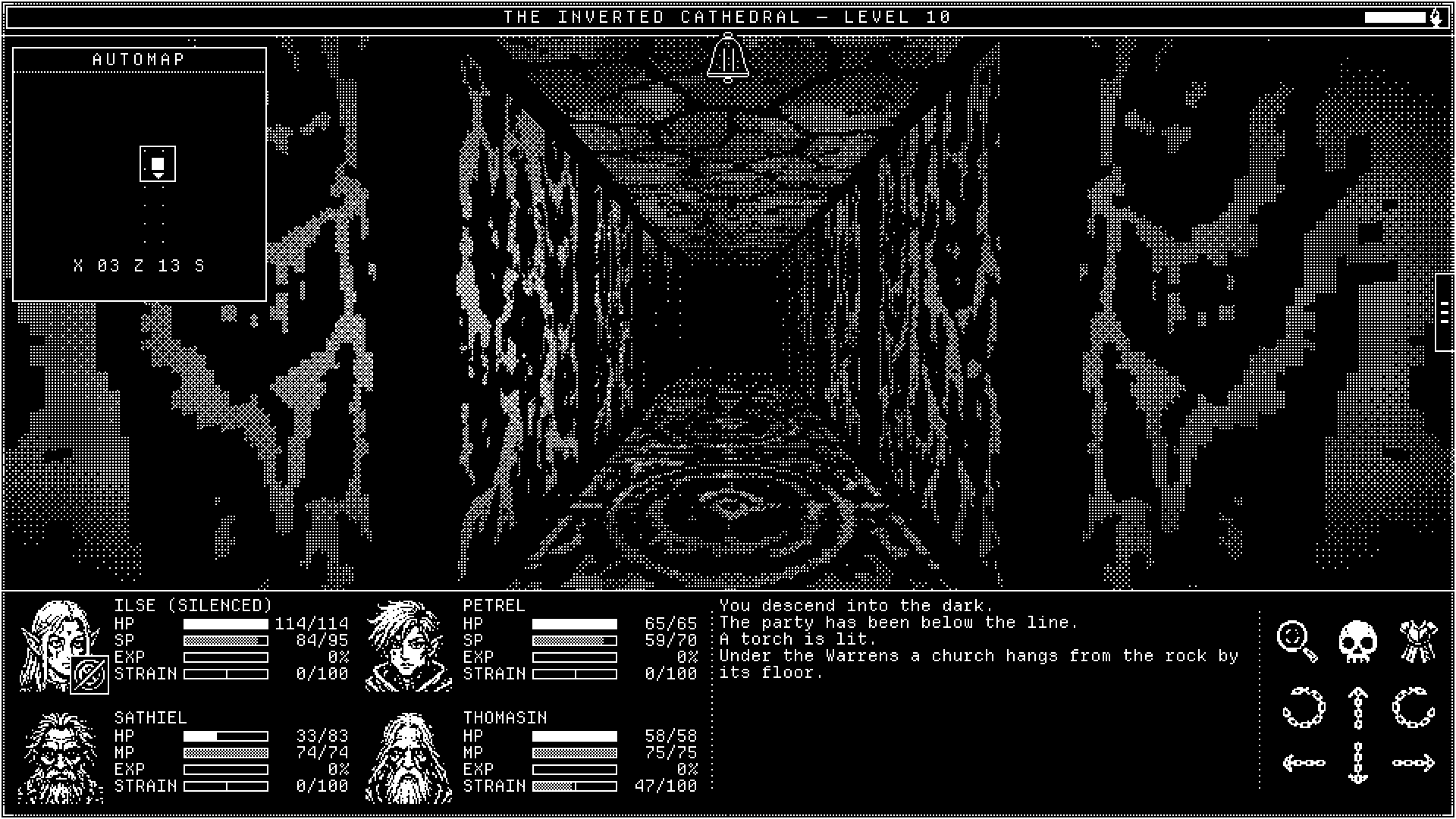
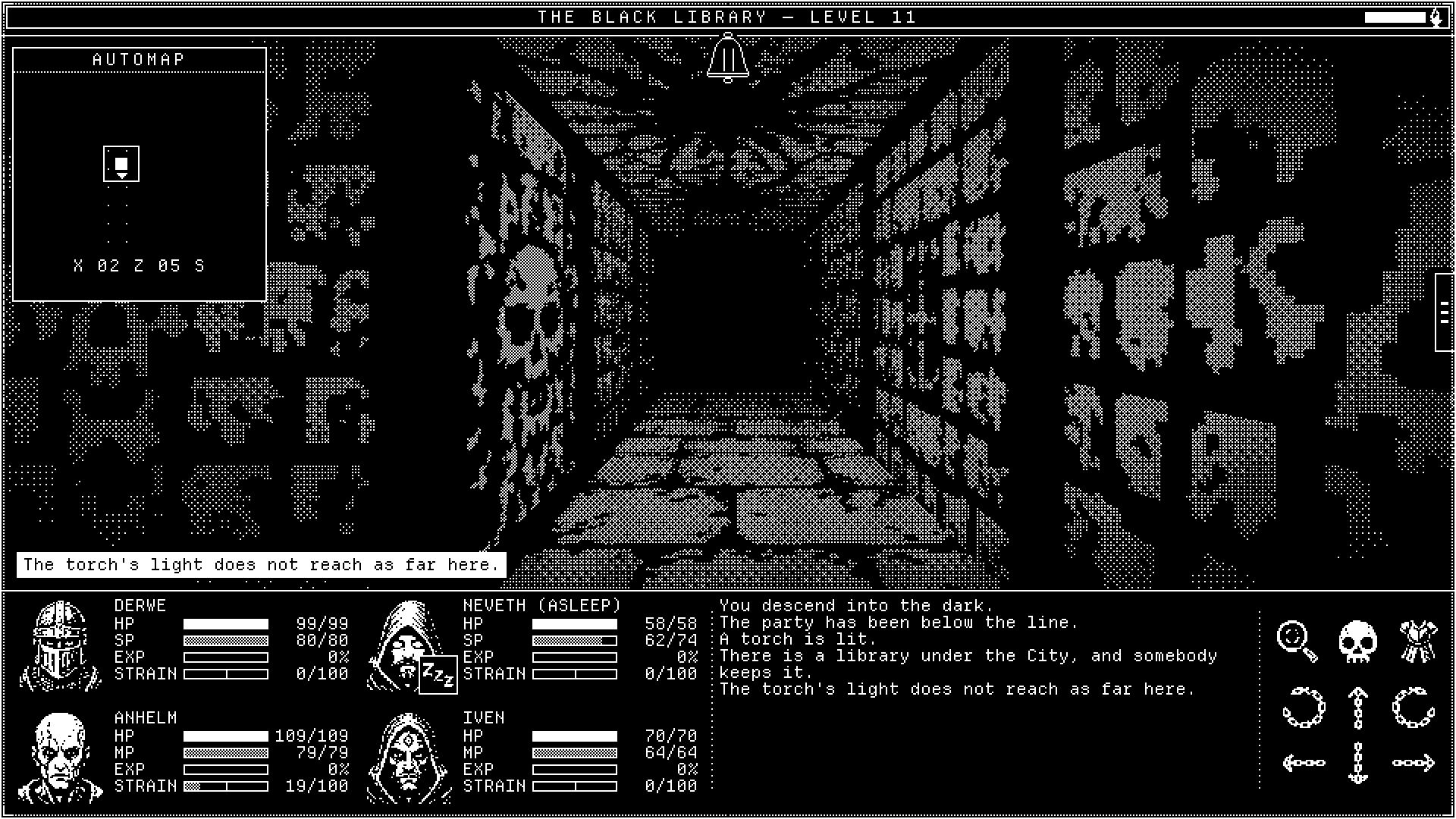
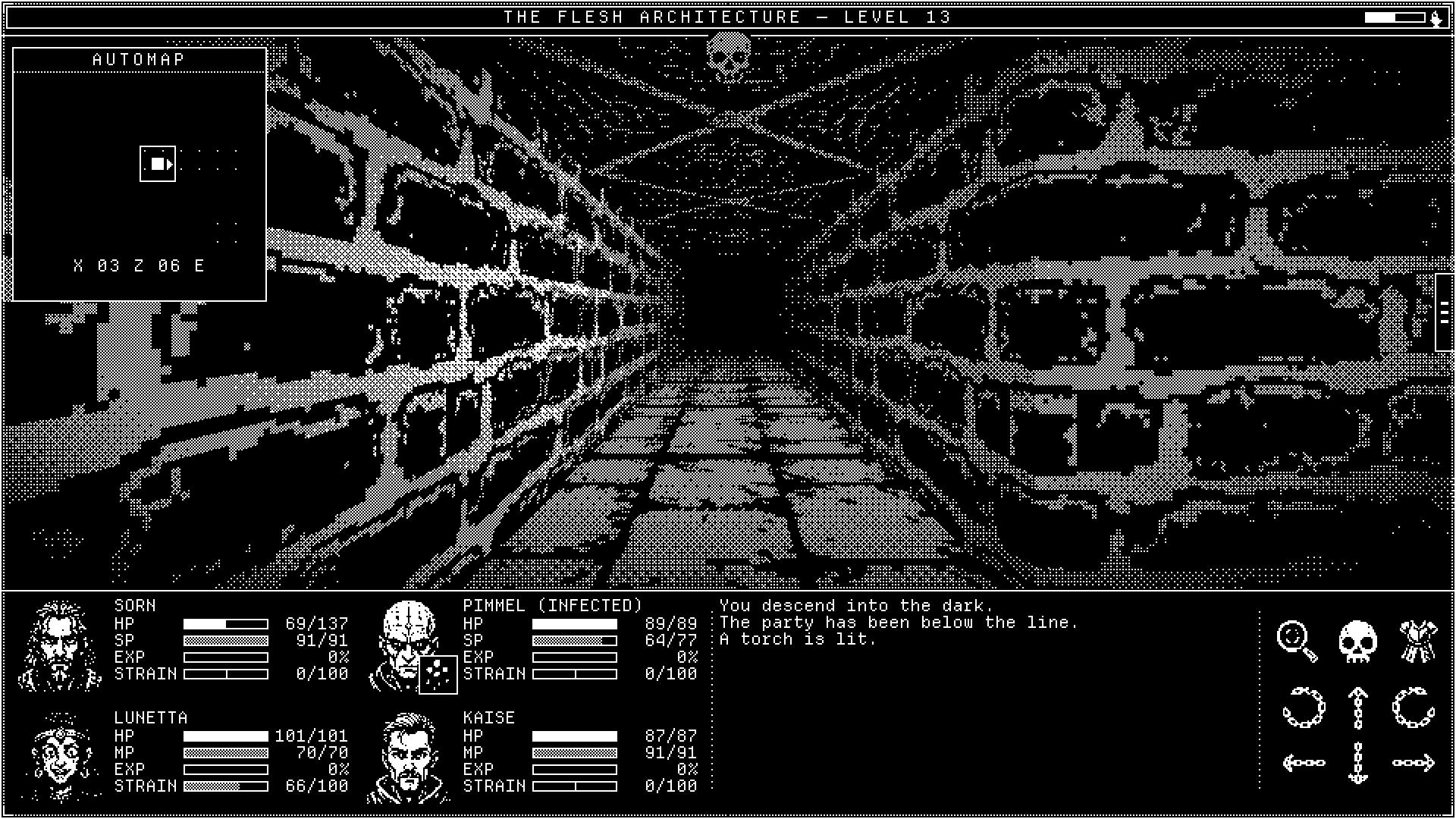
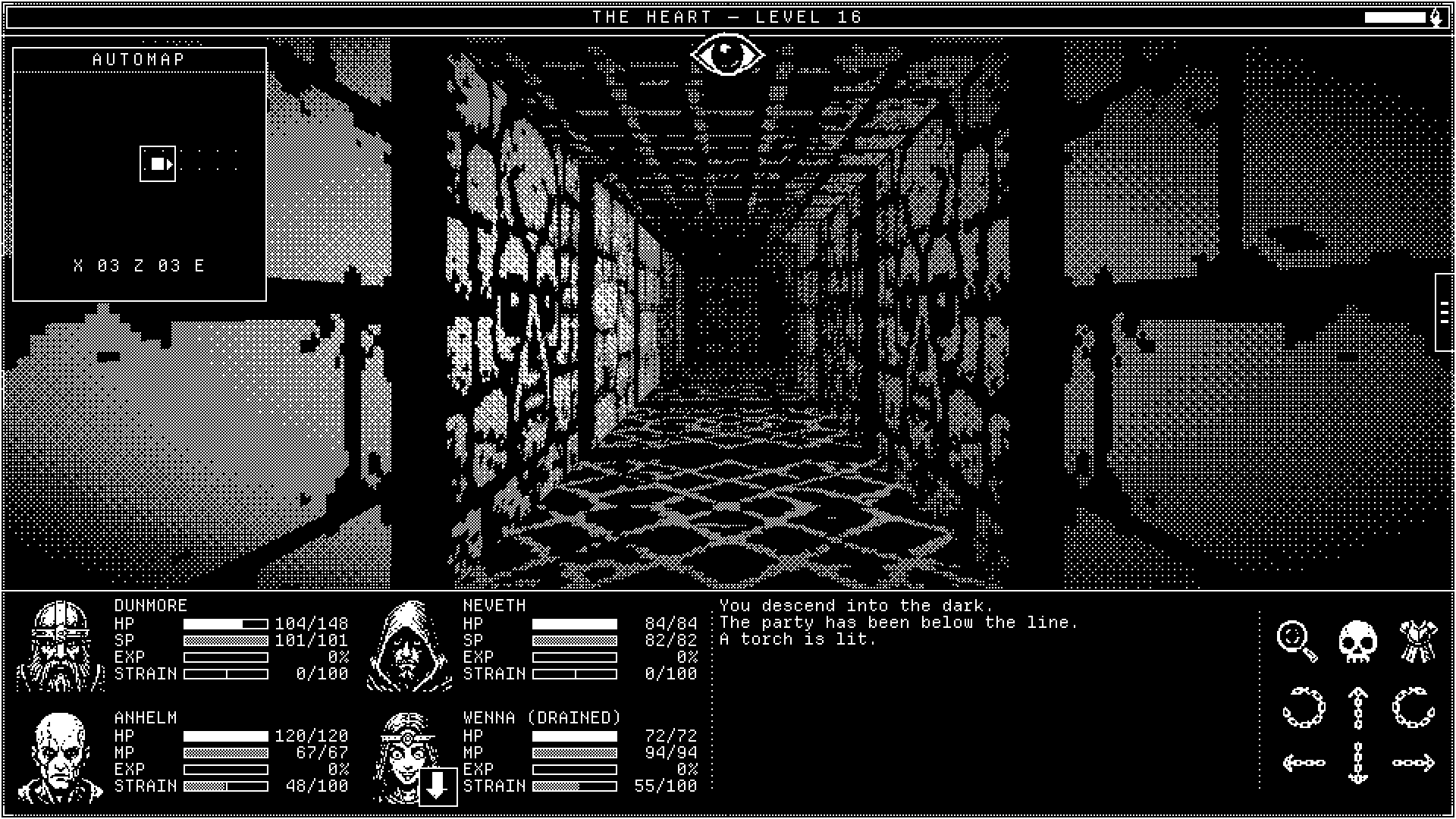
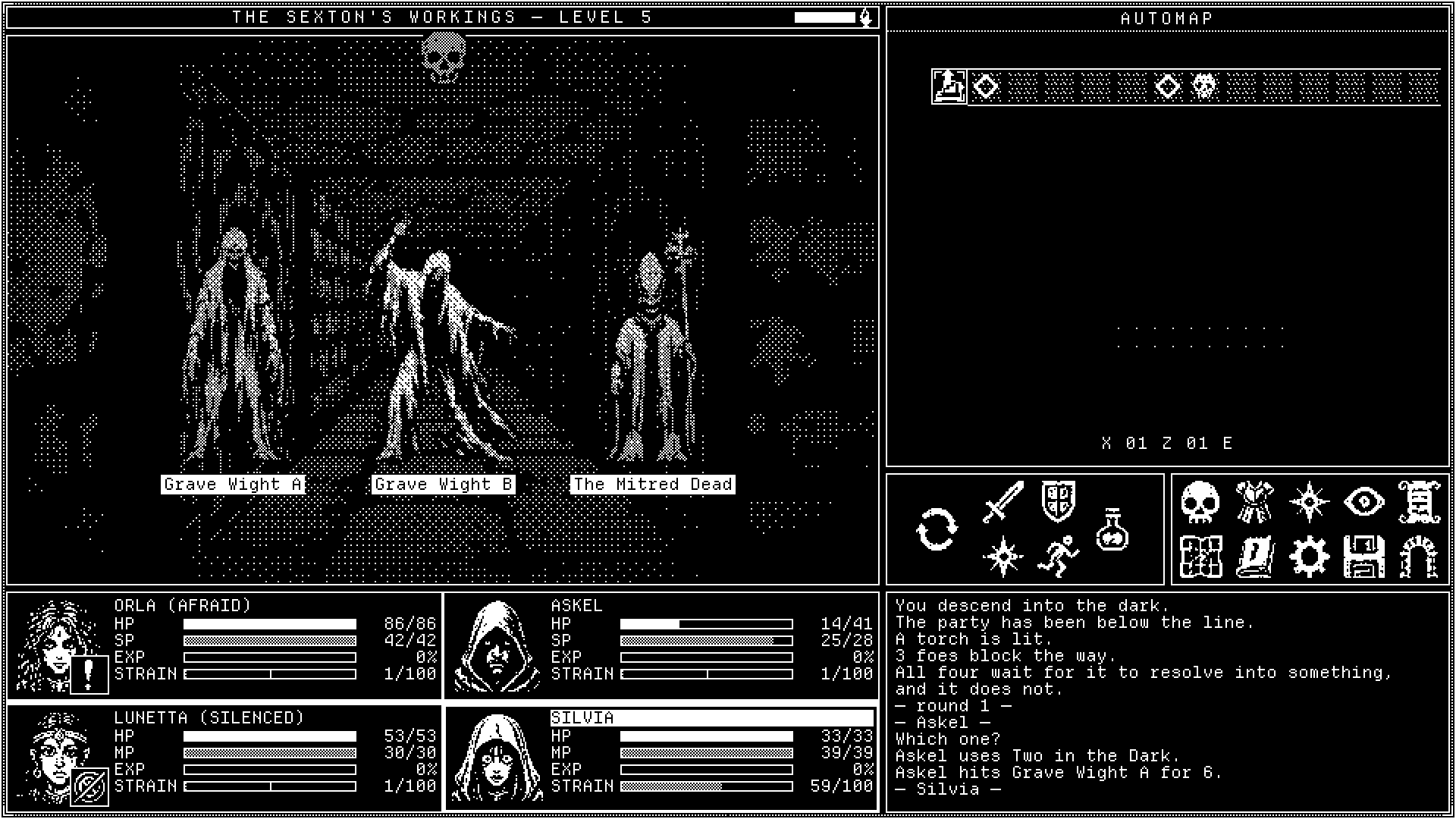
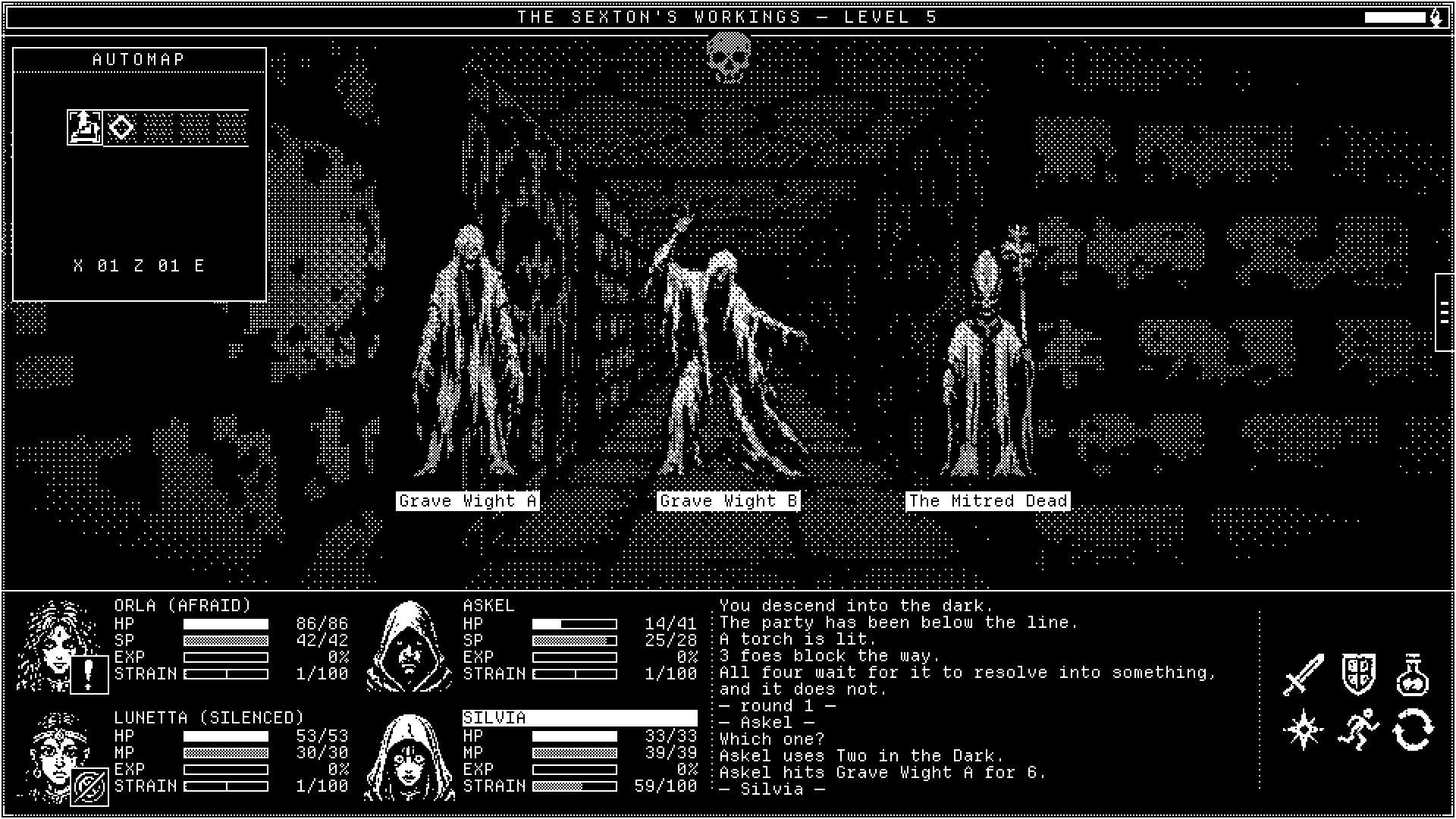
THE BLACK BELOW is a first-person dungeon crawler in the tradition of Might and Magic, Wizardry, Eye of the Beholder and Lands of Lore, the classics of the 90s that put a tabletop dungeon on a computer.
The well
The mystery is the reason to keep going down. There is something at the bottom of the Well, and the city has been living off what comes up from around it for longer than its records go back. The Archive’s entry on it revises itself as you bring up more evidence, and the revisions do not agree with one another. A census lists names that do not add up. A campsite has five bedrolls for four people. The game does not explain these in the scene that shows them, and it never settles on one explanation at all.
It plays like a tabletop campaign run by a referee who only describes what the party can see. The narration is impersonal and exact. A pack is propped against the wall, upright, still packed, and the straps were cut rather than unbuckled. What that means is left to you, and what you choose to do with that information results in five distinct endings.
The setting
The setting is a city that lives off a hole in the ground. The Well is the city’s mine, its pharmacy and its reliquary, and the Guild signs expeditions on a charter to go down it. You are one such expedition. Below the Well are sixteen floors, from the Forgotten Cells just under the city to places the Guild’s maps do not reach, and the dead of earlier expeditions are still down there. Some of them have been brought back up.
A 90s Grid-based RPG in a Postmodern world
It modernizes the shape where the old games were limited by their hardware rather than by their design.
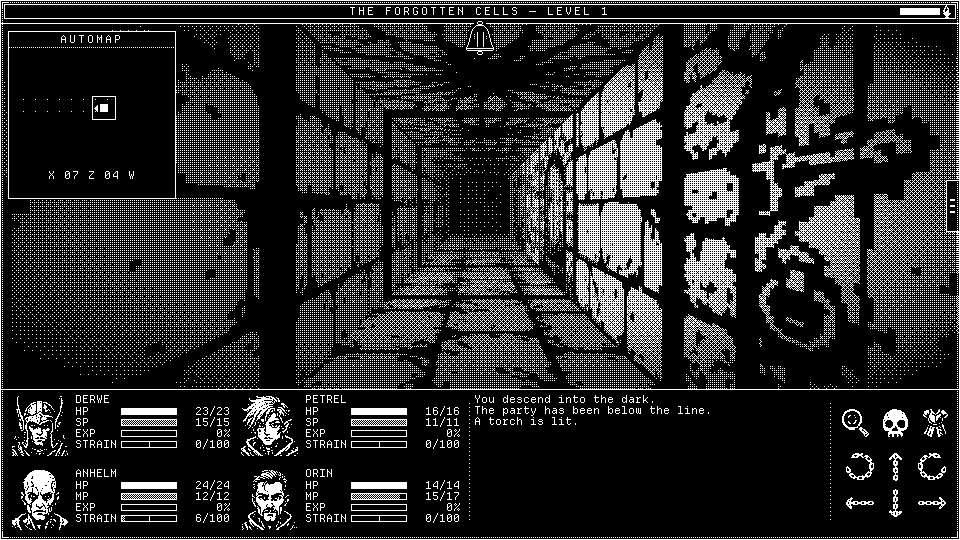
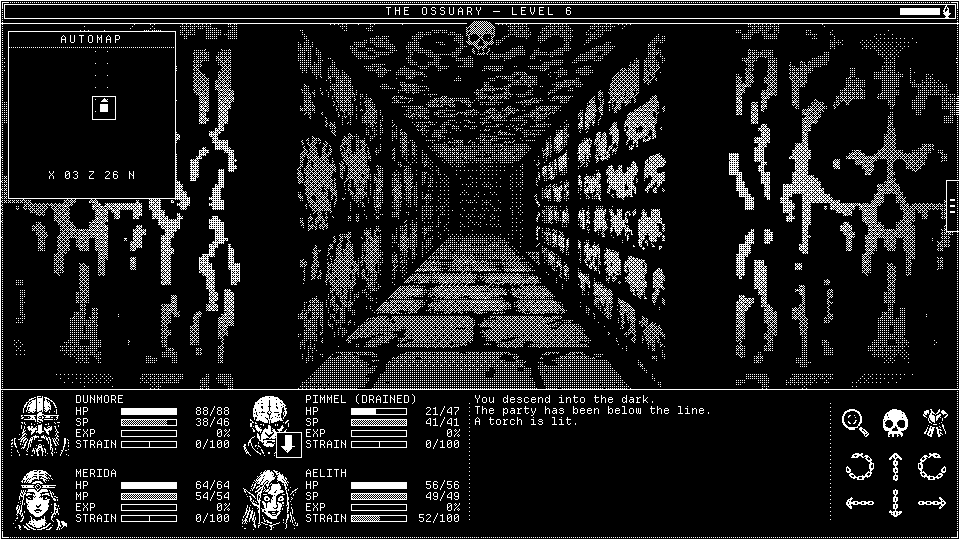
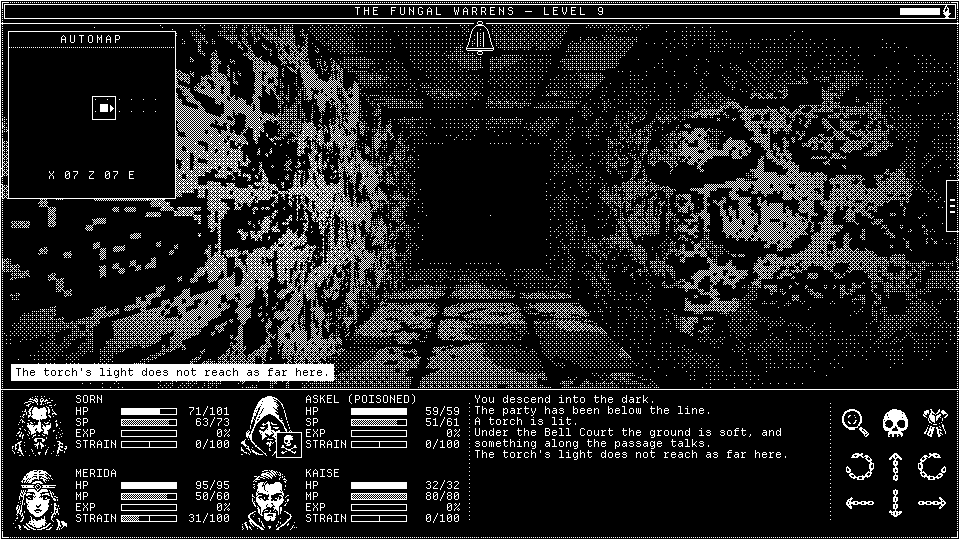
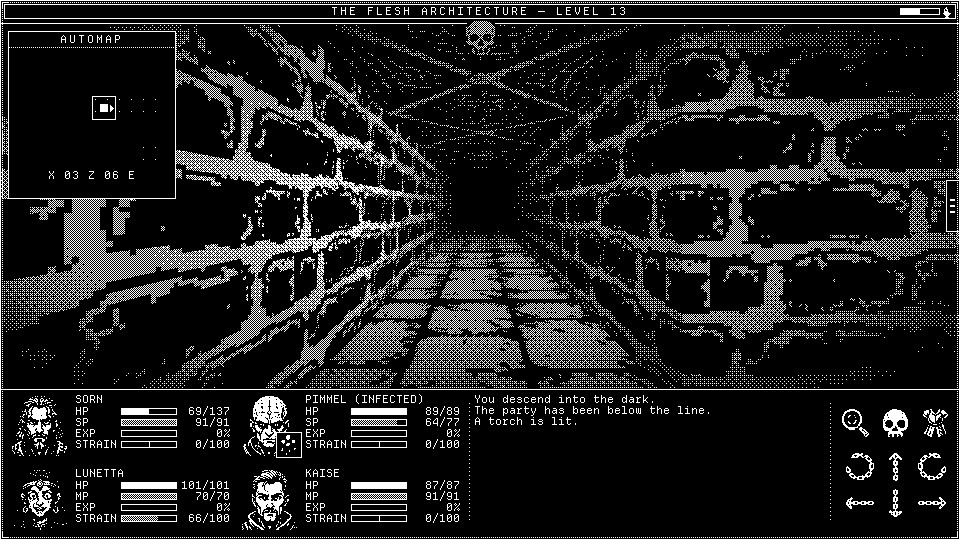
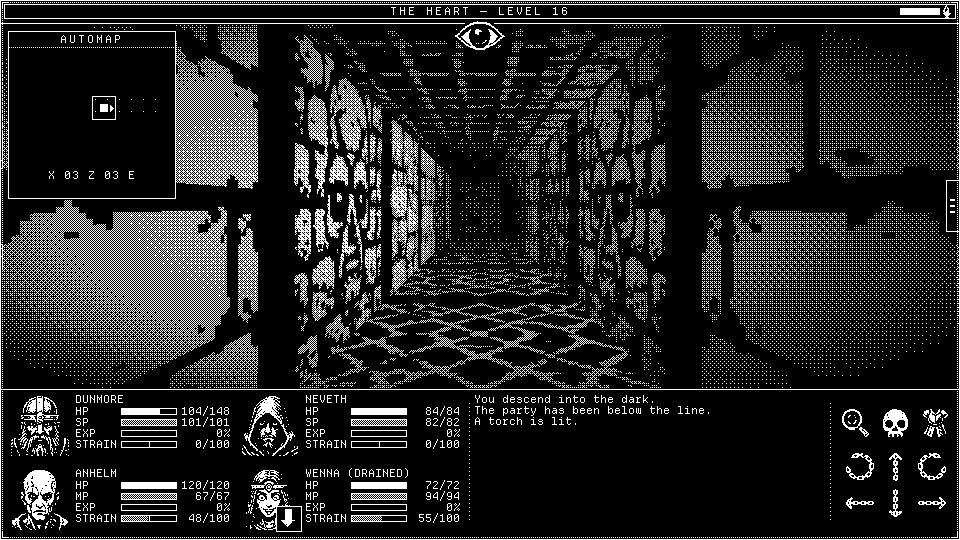
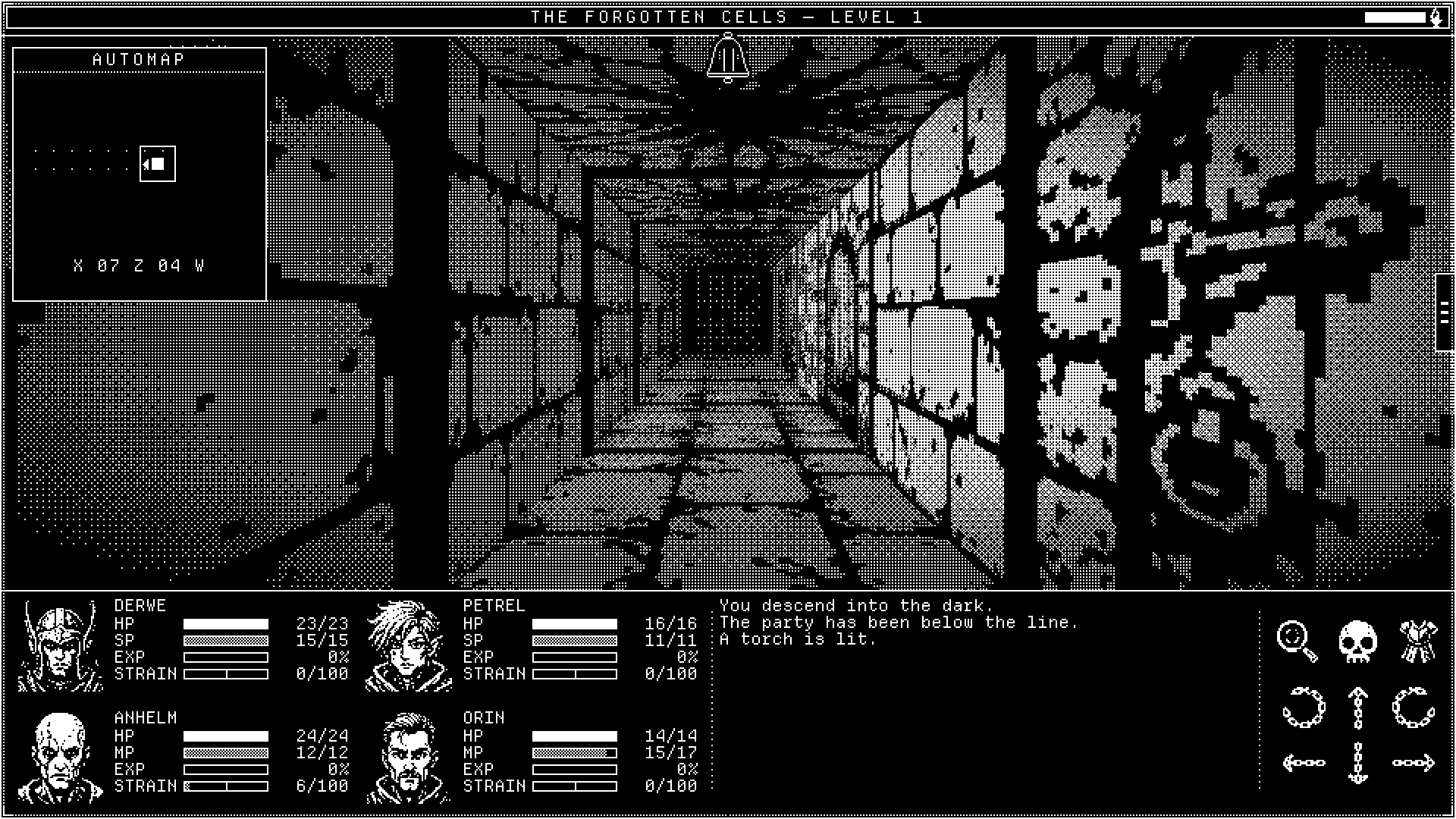
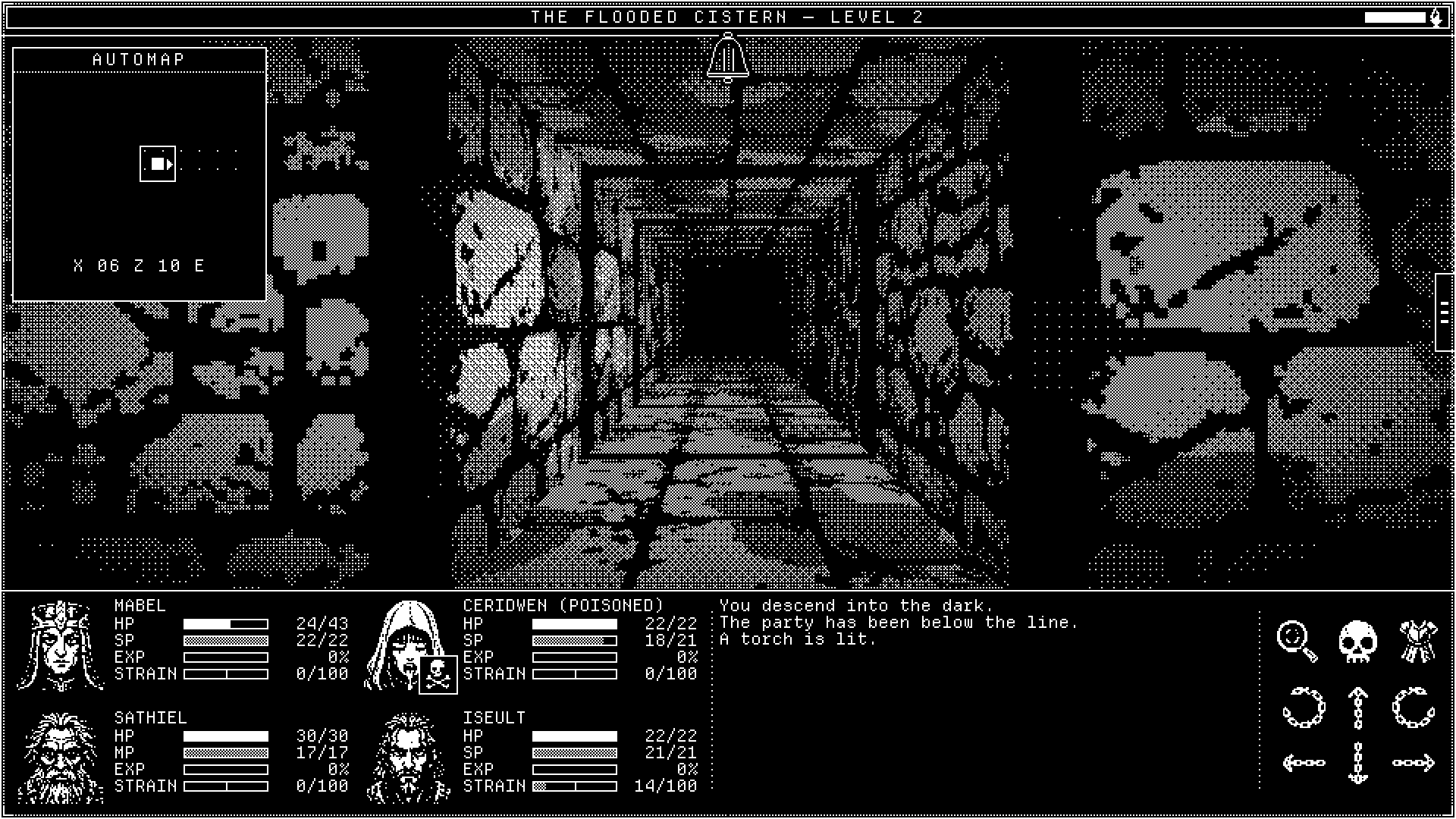
- The dungeon is a real 3D scene, lit and shaded, so a corridor has depth and a torch has reach.
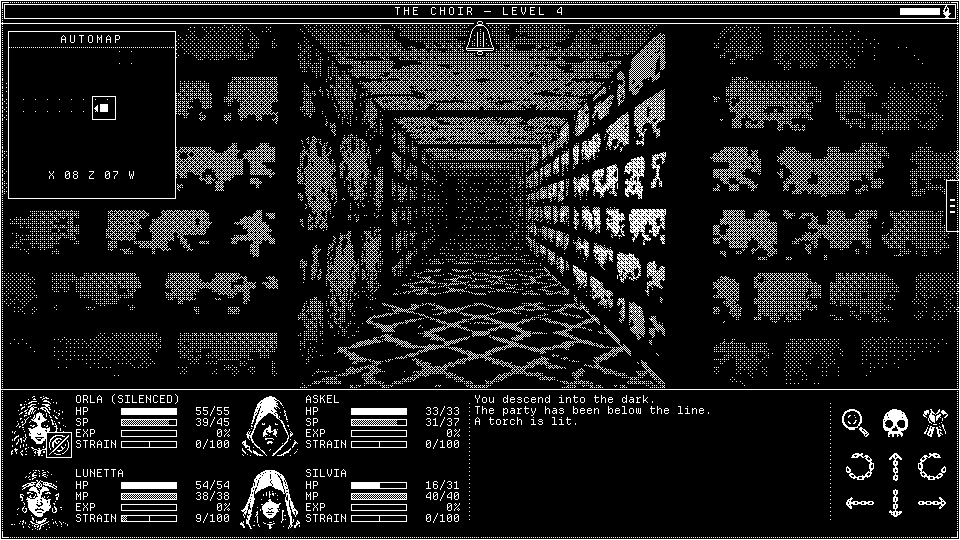
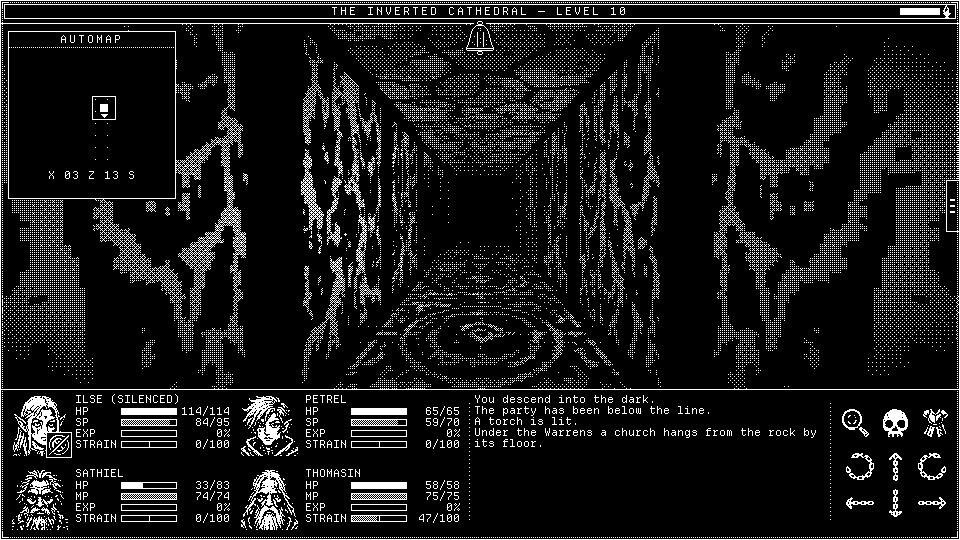
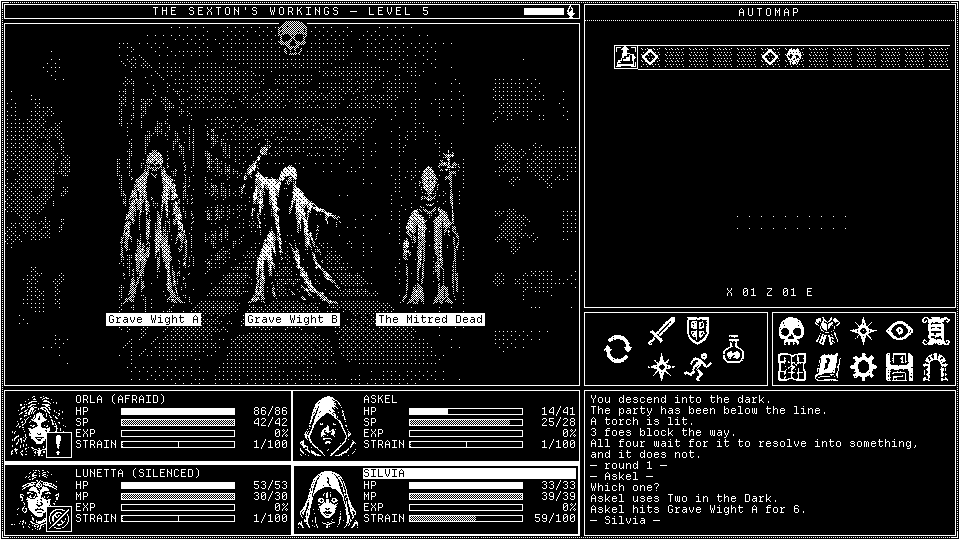
- The automap draws itself as you walk, and the journal keeps a bestiary, a quest log and an archive that fills in as you learn.
- Each class has a skill tree, so two Fighters can be built differently.
- Cutscenes help build out the story and unveil mysteries.
- Items are not good or bad. Every unique item with a boon comes with a cost.
- Fully directional procedural sound effects and reactive music.
Where it departs from the classics, it departs on purpose.
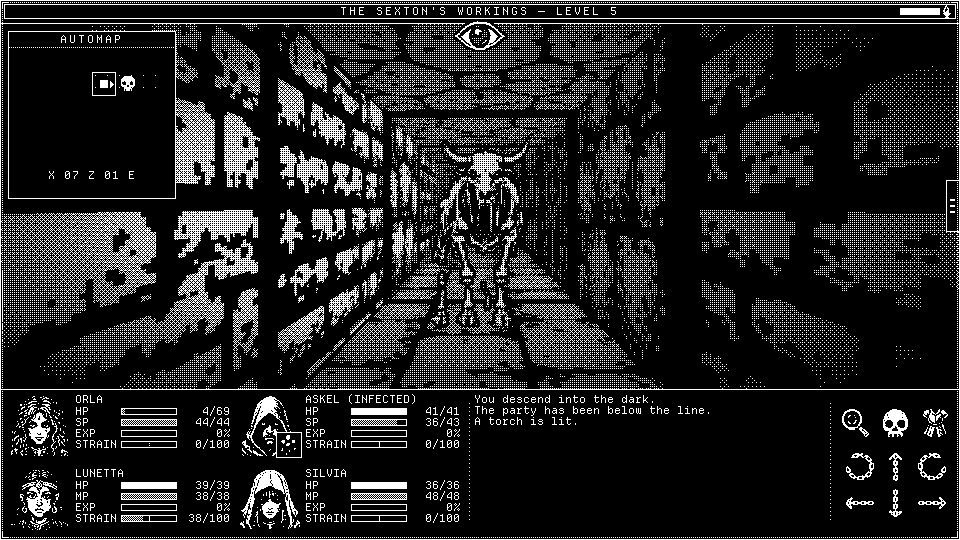
- Death is not removal: a fallen character keeps their place in the party and their equipment, and becomes a weight in the pack that you carry up or leave behind... but be careful, as you might see them again. Resurrection is possible, but at some point, they may not come back the same...
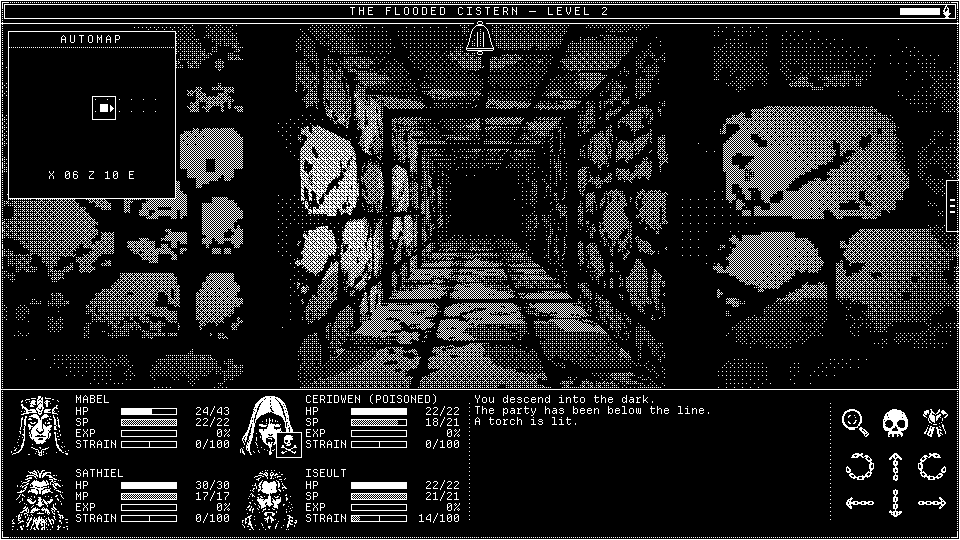
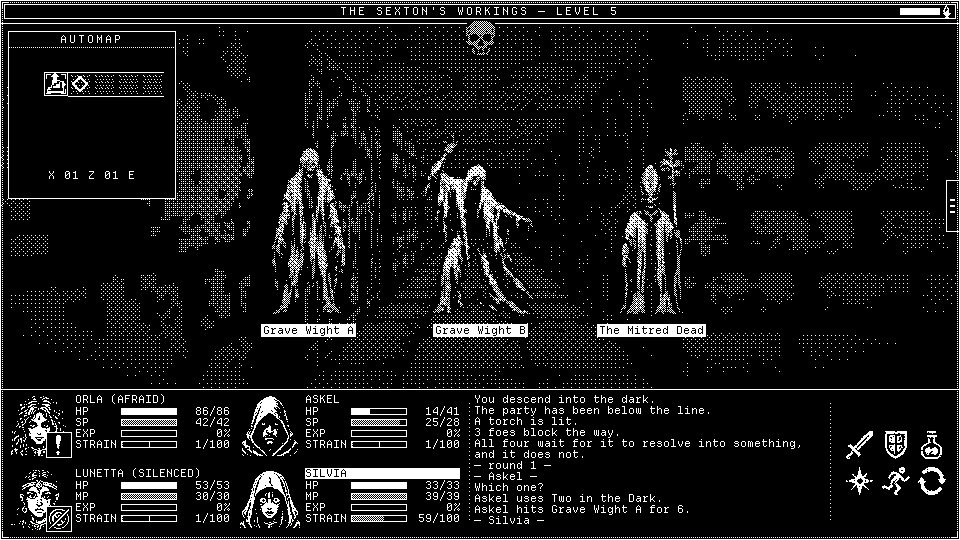
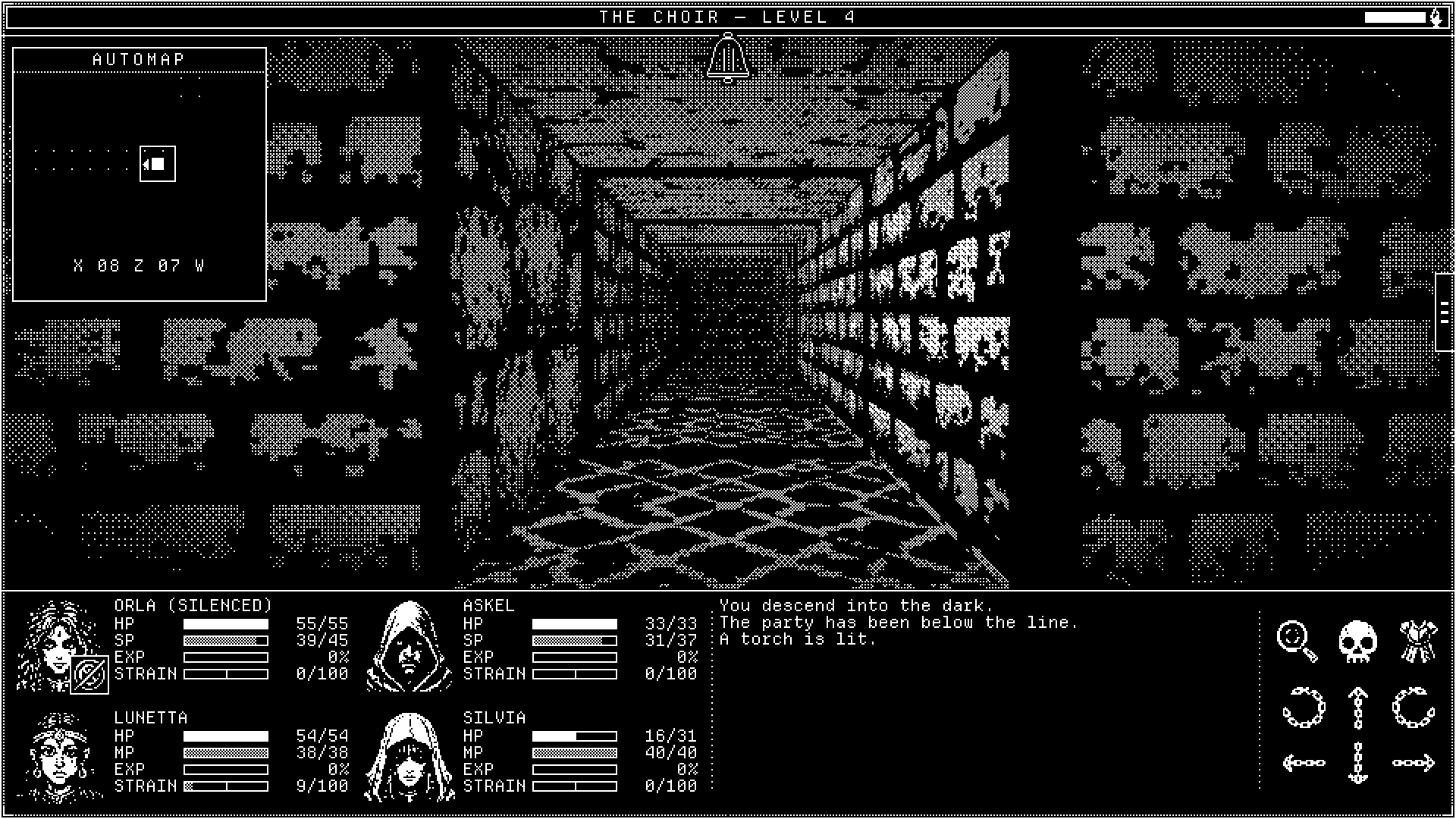
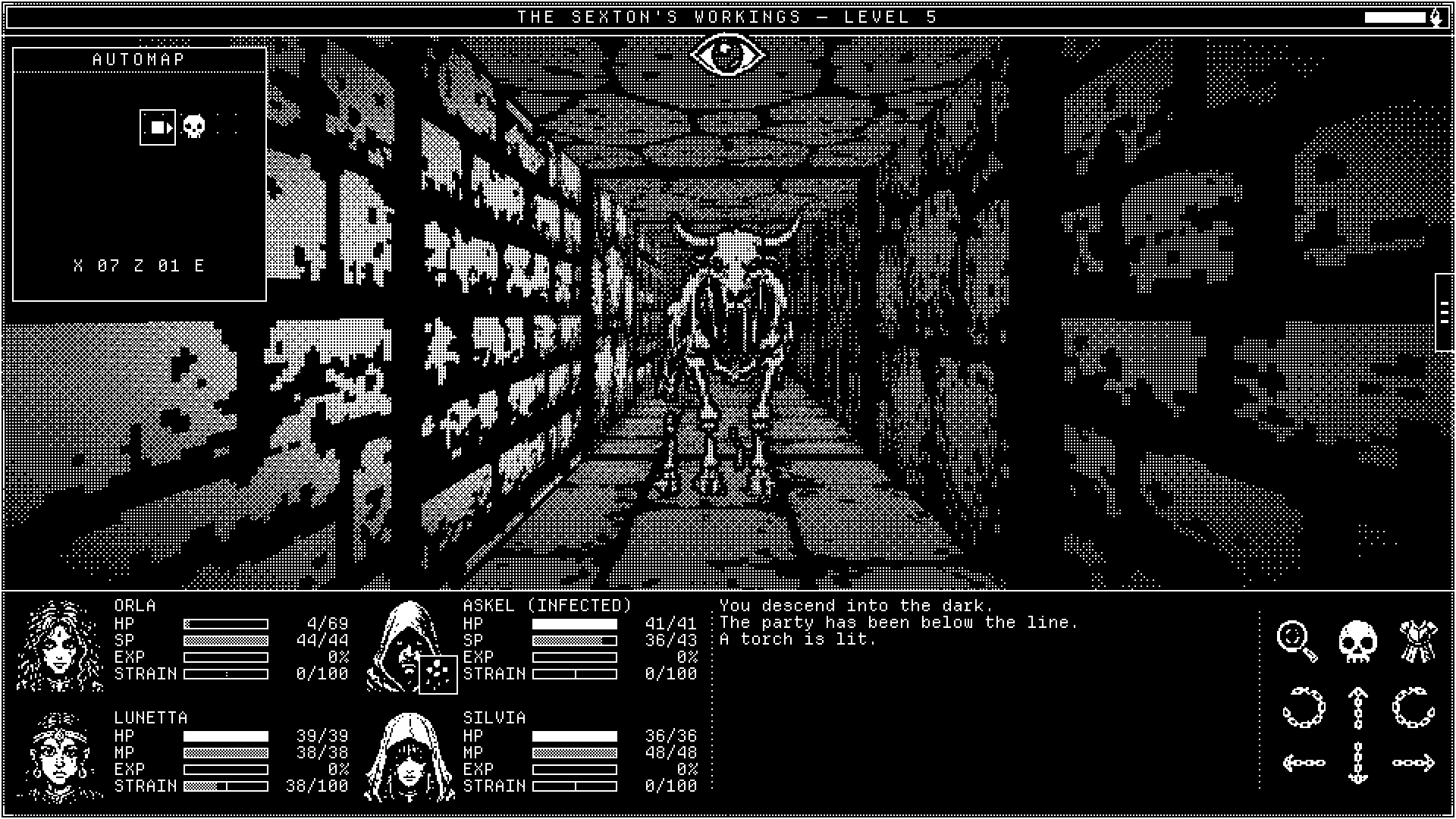
- Every character carries a strain score from 0 to 100, and as they go mad, the screen, the maps, and their actions begin to change.
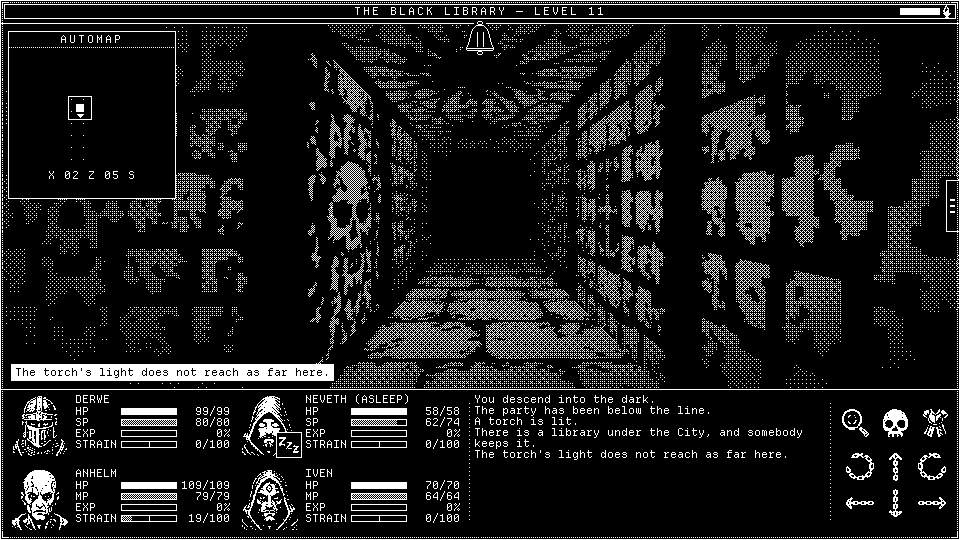
- The automap, which you trusted, starts to forget squares on the deeper floors and will eventually draw you doors that are not there.
- A character you hired as one of the five classes on the Guild’s board can turn out, over a long campaign, to be one of four classes that was never offered...
Non-photorealistic Rendering
The game is rendered in full 3D and then reduced to exactly two colors, one ink and one paper, in a single pass at the size you see it. There is no gray anywhere on the screen and nothing is scaled, which is why the dither holds still instead of shimmering. The city, the monsters and the items are drawn as engravings, in the manner of a medieval woodcut or an early Macintosh screen, with pixels that rapidly change, making for poor screenshots but amazing live video. When a creature is allowed to break the rendering rules, it does so individually: one monster may invert, another may smear or duplicate, but they never break the two color contract.
Evolved Sound
The sound is built the same way. Nothing in the game is a recording. Every footstep, every drip and every bell is synthesized as it happens, which lets each sound be placed at a distance and a direction in the dark around you. Over that sits a score of a hundred and two pieces in the dungeon-synth idiom, each one written for a particular floor, counter or fight, and the silences between them are budgeted rather than accidental. A corridor is quiet more often than not, and the quiet is part of the design.
The Experience
The game is based around the concept of "just one more try". Each adventure under the Well leads to new discoveries. A constant risk vs reward faces you at each step. Every level re-invents what you know, making each floor feel unique as you uncover mysteries in both the story and gameplay. The goal is to become immersed and begin to accept and expect the constant change. Resolution continues to build throughout, and at the end you are faced with decisions and actions that shape the world. Punishing for poor decisions, but forgiving enough to not cause hours of loss, it turns the frustrations of the classics to implications for a changing world. The title screen says the rest: not all who descend return as themselves.